Templates and resources
The inspection glossary your clients actually need
Plain-language definitions of the terms inspection reports lean on, from the condition scale to flashing and GFCI, written for first-time readers.
By Owen Murray, founder of InspectorKit · Updated July 6, 2026
Inspection reports are written by people who say flashing and drainage plane in normal conversation, and read by people buying their first house. The gap is real, and this glossary closes the client's side of it, the terms a report actually leans on, defined in plain words, organized the way a reader meets them. Inspectors are welcome to send it along with reports. That is what it is for.
The condition scale, the words that rank everything
Every item in a modern report carries a condition, and the scale is the report's grammar.
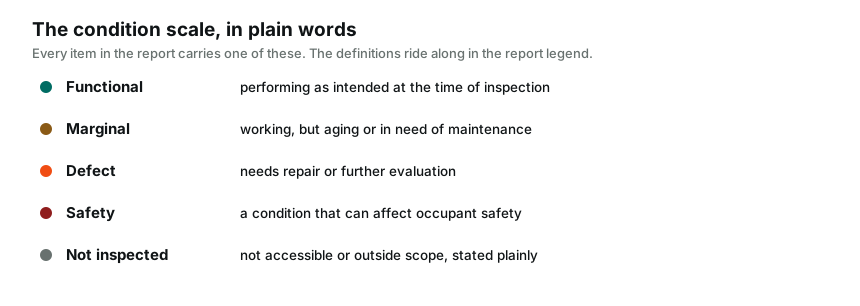
Functional means the item was performing as intended at the time of inspection. Marginal means working, but aging or in need of maintenance, the water heater in year eleven, the roof in its final third. Defect means the item needs repair or further evaluation, something is wrong enough to act on. Safety flags a condition that can affect the people in the house, and it outranks everything else in attention regardless of repair cost, a missing GFCI is cheap to fix and still leads the summary. Not inspected means the item could not be accessed or sat outside the inspection's scope, stated honestly rather than guessed at.
Two calibration notes save a lot of worry. Most items in a good house are functional, that is normal, not generosity. And at the time of inspection is doing real work in these definitions, a report documents a day, not a warranty, which is why the inspection date sits so prominently on the cover.
The phrases that puzzle first-time readers
Was observed. Reports say moisture staining was observed rather than there is a leak, because the inspector reports what they saw, past tense, without claiming causes they could not verify. It reads formal and it is simply precise.
Recommend evaluation by a qualified contractor. The report's way of routing a question to the person who can open the wall, run the test, and price the answer. It is not the inspector dodging, it is the triage between observer and diagnostician working as designed.
Serviceable, at the end of its useful life, monitor. Age and trajectory language. Serviceable means working now, end-of-useful-life means budget for replacement, and monitor means watch this and re-check, usually with a timeframe.
Visual, non-invasive inspection. The scope sentence. The inspector looked at everything accessible and moved nothing structural, opened no walls, dismantled no equipment. Everything in the report lives inside that boundary.
House vocabulary, the frequent flyers
Flashing, the metal or membrane sealing roof transitions, around chimneys, walls, and valleys, and the place roofs actually leak. Grading, the slope of the ground at the foundation, which should send water away from the house, the reason so many reports discuss dirt. Downspout discharge, where the gutter water actually ends up, ideally well away from the foundation.
GFCI, the outlet that protects people from shock near water, kitchens, baths, garages, exteriors, with the test and reset buttons. AFCI, its cousin in the panel, protecting against fire from damaged wiring. Service panel, the breaker box, whose brand and condition occasionally earn paragraphs because certain vintage panels have documented problems.
Efflorescence, the white mineral bloom on basement masonry that says water has moved through it. Settlement, the normal slow movement of a house on its soil, versus movement worth a structural engineer's letter, a distinction your report handles with careful language and, where warranted, a routed recommendation. Data plate, the manufacturer's label on equipment that tells the inspector its age, which is how the water heater's birthday ends up in your report.
Process words, the other half of the report
A few terms describe the inspection itself rather than the house. Scope is what the inspection covers, defined by your state's standards of practice, the baseline rules for what inspectors must and need not examine. Readily accessible is the boundary phrase inside that scope, the inspector examines what can be reached and seen without moving the seller's belongings or dismantling the building. Option period or due-diligence window is the contractual stretch of days the buyer has to inspect and negotiate, the clock that makes report turnaround matter so much. Repair request is the document your agent drafts from the report's findings, usually from the summary. And re-inspection is the short follow-up visit that verifies negotiated repairs actually happened, with its own brief report of verified and remaining items.
One more pair earns a mention because clients meet it in every negotiation, cosmetic versus material. Cosmetic describes conditions that affect appearance rather than function, scuffed trim, faded paint, and inspection reports generally note them lightly or not at all depending on scope. Material conditions affect function, safety, or value, and they are what the report exists to document. The distinction matters because repair requests built on cosmetic items stall negotiations, while requests built on material findings, the ones your summary already ranked, tend to get answered.
Reading the report with the glossary in hand
The vocabulary clicks fastest against a real document, and a worked example shows every term above in its natural habitat, the condition legend defining the scale, was-observed narratives with routed recommendations, the summary leading with the items that deserve attention first.
The practical reading order for a client, the stats band for the shape of the house, the summary for what matters, then the body for any item you want in full, each finding carrying its narrative and photo together. Anything still unclear after that is a fair question for your inspector, and the good ones would rather take the call than have you guess. The report was written to be understood, and with the grammar above, it is.
Common questions
Why do inspectors say recommend evaluation instead of just saying what is wrong?
Because a visual inspection observes conditions and cannot see causes, and honest reporting stays inside what was actually observed. Recommend evaluation by a qualified contractor routes the diagnosis to someone who can open things up, test, and price the fix. It is precision, not evasion.
Is a defect the same as a deal-breaker?
No. Defect means the item needs repair or further evaluation, and most houses, including good ones, have a few. Whether any defect matters to your purchase depends on cost, negotiation, and your plans, which is a conversation for you and your agent with the report open.
What does it mean when something was not inspected?
That the item was inaccessible or outside the inspection's scope on the day, and the report says so instead of guessing. A locked electrical panel, a snow-covered roof, a fully furnished attic hatch. The honest not-inspected is itself information, and often a to-do for before closing.