Templates and resources
An editable inspection template, why it beats the perfect one
Why template editability beats completeness, the four editing moves that adapt any checklist to your market, and what to look for in a tool.
By Owen Murray, founder of InspectorKit · Updated July 6, 2026
Search for inspection templates and the results promise completeness, more items, more sections, every possibility pre-listed. Completeness is the wrong axis. No template ships correct for your state's SOP, your market's housing stock, and your personal walking rhythm at the same time, which means the property that actually matters is editability, whether the checklist can become yours.
The distinction sounds small and decides your daily experience for years.
Why the perfect template cannot exist
Three forces guarantee it. Standards of practice differ by state, what Texas requires and what Oregon requires overlap heavily and not completely, so any national template is somebody's compromise. Housing stock differs by market, pool country, septic country, hundred-year-old-basement country, and new-build suburbia each produce findings a fixed checklist either misses or pads everyone else's scroll with. And inspectors differ, the walk order that feels inevitable to you is someone else's constant jumping.
A fixed template forces the workaround habit, findings filed under almost-right items, market realities handled in a notes field, the checklist slowly becoming something you fight instead of something that carries you. An editable one absorbs all three forces with a dozen changes, made once.
The four moves
Every adaptation reduces to four operations, and a template editor worth the name makes all four cheap.
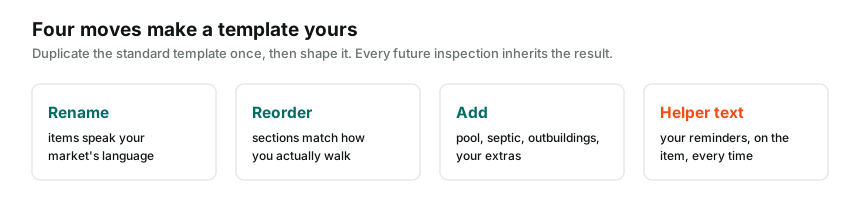
Rename makes items speak your language, the label you reach for on a tired Thursday instead of the label a committee chose. Reorder aligns sections with how you physically walk, which matters because the field workflow works best when the open section and the current room agree. Add extends the checklist to what your market actually serves up, a pool section in Phoenix, septic observations in the county, a wood stove item in the mountains. And helper text attaches your own reminders to any item, invisible to the client, present at every opening, the layer where hard-won catches become permanent infrastructure.
The standard residential template is the base these moves operate on, eleven sections and 42 items ordered roof to garage, and the working pattern is duplicate-then-shape, keep the standard intact, make the copy yours.
Editability as a purchasing criterion
Tools differ sharply here, and the differences hide until after purchase. Some platforms lock templates entirely, some allow edits only on higher pricing tiers, some make each change a support ticket, and some technically allow editing through an interface hostile enough that nobody does. The evaluation question is concrete, can you, on the trial, in ten minutes, add a section, rename an item, reorder two things, and see the change appear in a new inspection. If yes, the tool respects the fact that the checklist is your professional instrument. If no, you have learned who the template actually belongs to.
The adjacent question is portability, whether the tuned template can leave with you. A structure you spend two years refining is an asset in the same class as the comment library, and the export path should cover it, printable and portable, because tuned judgment should never be hostage to a vendor relationship.
For inspectors arriving from a locked platform, the template rebuild guide covers reconstructing your structure, and the honest summary is that it costs an evening and pays back on every job after.
The maintenance rhythm
An editable template invites a light maintenance habit, and twice a year is the right cadence. Walk the template against your last twenty reports, any finding you repeatedly filed under an almost-right item deserves its own home or a rename, any section you always walk out of order deserves the reorder, and any near-miss from the season deserves a helper-text line so the lesson outlives the memory.
The edits compound quietly. Every future inspection inherits each improvement automatically, which is the property that makes the template an asset rather than a setting. Two years of light tuning produces a checklist so fitted to your work that inspecting from anything else feels like borrowed boots.
The specialty templates, the same four moves at full stretch
The editing moves scale past tuning and into whole service lines. A pre-listing inspection runs happily on the standard template, but a pre-drywall visit does not, no rooms exist yet, and the sections that serve it are framing, rough plumbing, rough electrical, and HVAC rough-in. An editable template makes that a twenty-minute duplicate-and-reshape, after which the specialty template exists forever. The same move builds a condo template with the site sections trimmed, a manufactured-home variant with its specific structural items, or a four-point insurance inspection cut down to the systems the carrier asks about. Each new service line is one template evening away, which is a meaningful business capability disguised as a settings page.
The template as your professional instrument
Here is the frame that makes the whole subject click. The template is not paperwork, it is the encoded version of how you inspect, your SOP compliance, your market knowledge, your sequence, your reminders. A locked template means practicing your profession through someone else's encoding forever. An editable one means the instrument gets better every season you play it.
That is why editability beats completeness, why the ten-minute trial test above belongs in any software evaluation, and why the inspectors happiest with their tooling are rarely the ones with the most items in the checklist. They are the ones whose checklist, item by item and season by season, became exactly theirs.
Common questions
How much editing does a standard template actually need?
Less than switchers fear and more than zero. Most inspectors land within a dozen changes, a section added for the market's pools or septic systems, a few items renamed into local vocabulary, helper text on the items that have bitten them. The point is not heavy surgery, it is that the dozen changes are possible.
Should I build a template from scratch instead?
Almost never. A vetted standard template encodes walking order and SOP coverage you would otherwise re-derive by trial and error. Duplicate it, shape it, and keep the base intact as a fallback. From-scratch templates mostly reproduce the standard one, minus something important.
What happens to my old reports when I edit the template?
Nothing, and any tool where the answer differs is disqualifying. Published reports are fixed documents. Template edits shape future inspections only, which is what makes twice-yearly tuning safe to do.