Report writing craft
Pre-listing inspection reports, the seller-side playbook
How pre-listing inspections differ from buyer inspections, the report adjustments that matter, and how the service builds agent relationships.
By Owen Murray, founder of InspectorKit · Updated July 6, 2026
A pre-listing inspection is the same house, the same systems, and the same findings as a buyer's inspection. What changes is when it happens and who is reading. Those two changes ripple through how the report should be written, delivered, and sold, and inspectors who handle the ripple well tend to find that seller-side work becomes the steadiest referral channel they have.
What actually changes when the seller orders
Timing, first. The inspection happens before the sign goes in the yard, which means findings arrive while the seller can still fix things on their own schedule, with their own contractor, at quoted prices instead of negotiated credits. A repair that costs the seller eight hundred dollars in October costs three thousand in credit demands during escrow, because escrow repairs are priced by fear and deadline rather than by bids.
The reader, second. A buyer reads an inspection report deciding whether to purchase. A seller reads it planning what to fix and what to disclose. Same facts, completely different job, and the report's framing should respect the difference without ever bending the facts themselves.
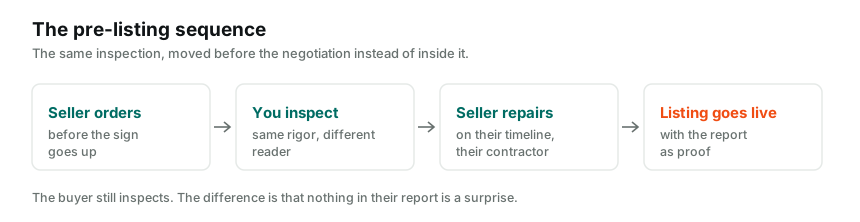
The findings do not change, the frame does
Get this boundary right and everything else follows. The observation, the implication, and the recommendation stay exactly as rigorous as buyer-side work, because the narrative discipline is not audience-dependent. A damaged flashing narrative reads identically in both reports.
What shifts is the surrounding structure. The summary page becomes a repair-planning tool, so grouping findings by trade serves the seller better than grouping purely by severity. A seller staring at four plumbing items and three electrical items can book two contractors and clear seven findings in a week. The same items scattered through a severity-ordered list read like seven separate problems.
Disclosure is the other frame shift. In most states, a seller who commissions an inspection now knows what it found, and known conditions typically join the disclosure obligations. Say this plainly when the agent books the job. It is not a downside, it is the mechanism that makes the whole strategy work, since disclosed-and-repaired findings are precisely what keeps the buyer's inspection boring, and boring is the goal.
Wording for the seller-side reader
Two adjustments keep the language working for a planning reader while staying dispute-proof.
Route recommendations to trades with unusual precision. The seller is about to hire from your recommendation lines, so recommend correction by a licensed roofing contractor is not boilerplate here, it is the shopping list. Vague routing that a buyer would skim past becomes an actual obstacle for a seller trying to book the work.
And keep the liability-safe phrasing fully intact, because this report will be read by more parties than any buyer's report. The seller reads it, their agent circulates it, the buyer's agent may see it, and the buyer's inspector may be handed it. A pre-listing report is the most public document you produce. Writing it as if the most skeptical future reader is guaranteed to see it is not paranoia, it is an accurate prediction.
Delivery, where the agent relationship gets built
The report should reach the seller and the listing agent the same day, and the send-to-client flow handles both in one pass, each copy worded for its reader. Speed matters more here than on buyer work. The listing timeline is usually compressed, and an agent who gets same-day pre-listing reports learns exactly one thing about you, that you make their listings move faster.
That lesson is the business model. Buyers hire you once. Listing agents hire you every listing, and a pre-listing report that helped a deal close clean is the strongest possible audition. Include the agent-facing summary, deliver fast, and be the inspector whose reports they can hand to the other side without flinching.
Scope honesty, what pre-listing work is not
Two boundaries keep the service clean. It is not a warranty, and the report should say so in the same limitations language your buyer reports carry. Conditions change, systems fail after the visit, and the report documents a day, not a guarantee.
And it is not a negotiating document for hiding problems. An agent who wants findings left out is asking you to co-sign a disclosure violation with your license attached. The answer is that the report documents what was observed, every time, and the inspectors with decade-long agent relationships are uniformly the ones who never bent on this. Softness gets discovered at the buyer's inspection, and the discovery costs everyone more than the honest finding would have.
The re-inspection follow-on
Pre-listing work carries a natural second visit inside it. Sellers who repair from your report often want the fixes verified before listing, partly for their own confidence and partly because a verified-repairs letter strengthens the disclosure package. That visit is a standard re-inspection, scoped to the repair list, priced as a partial service, and it turns one seller engagement into two paid visits plus a listing that carries your work product into the market.
Running it as a service line
Practically, pre-listing work slots into a solo practice with almost no overhead. The template is your standard residential template, the workflow is your normal field workflow, and the deliverable is the same published report with delivery to seller and agent. Price it at your standard fee, mention it to every listing agent you meet, and let the deal-smoothing results compound. It is the rare service line where the marketing is just doing the work well and letting agents draw the obvious conclusion.
Common questions
Does a pre-listing inspection replace the buyer's inspection?
Almost never, and it should not be sold that way. Most buyers still inspect. The pre-listing report's value is that nothing in the buyer's report arrives as a surprise, which keeps the deal out of the renegotiation spiral that kills closings.
Should the report soften findings because the seller is paying?
No, and this is the line that protects you. The findings are the findings regardless of who ordered the inspection. What changes is framing and delivery, a repair-planning tone instead of a decision-making one, never the substance. A softened report that a buyer's inspector later contradicts damages the seller, the agent, and your name in one move.
How should pre-listing work be priced?
Most inspectors price it at or near their standard inspection fee, since the work is the same scope. The business value is not a premium price, it is deal flow. Listing agents who use pre-listing inspections order them repeatedly, and one agent relationship can be worth a season of inspections.