Guides
Straight answers about inspection software and reports
80 guides. Comparisons with real numbers, switching playbooks, and report-writing craft, written by the founder who builds InspectorKit and answers its support email.
Start here
Alternatives and comparisons
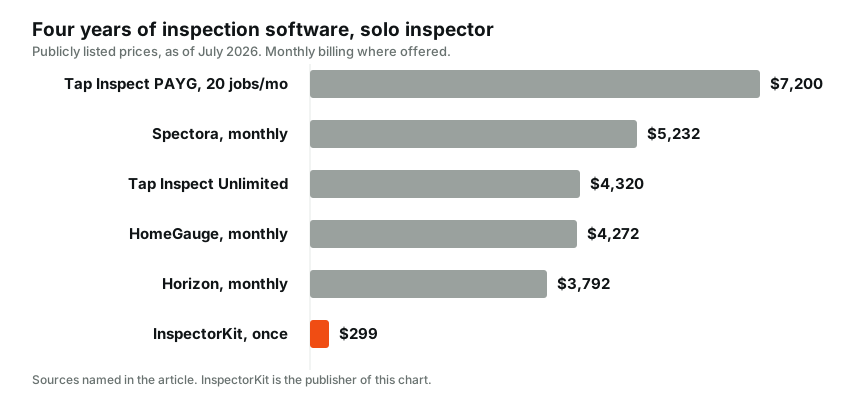
Real pricing for every major tool, verified and dated, with the four-year totals vendors leave off the page.
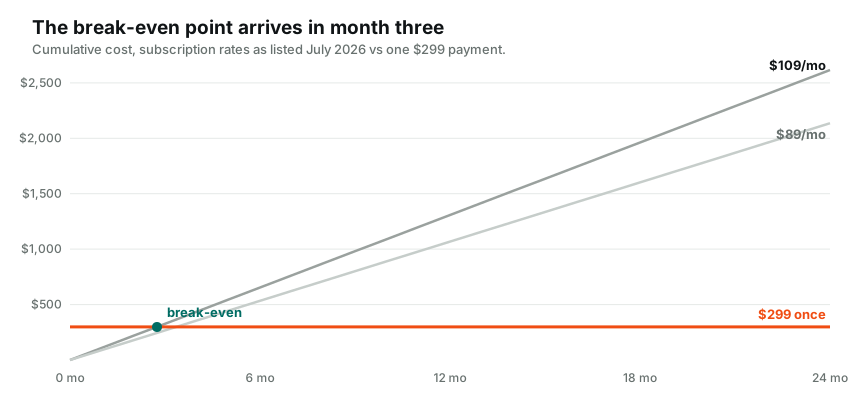
Data ownership in inspection software, the questions that matterYour reports are liability protection, your library is a career of judgment. What owning that data means in practice, and how to audit any vendor's exit door.Free home inspection software, what free actually buys youThe genuinely free options, the trials pretending to be free, the evening-cost math nobody runs, and when free is honestly the right call.Home inspection report software compared on what you can verifyA comparison built from checkable facts only. Pricing models, four-year totals, device requirements, and data-exit terms for the tools inspectors shortlist.Home inspection software without a subscription, what exists and what to checkWhy inspection platforms charge monthly, what subscription-free really means, and the checklist separating real ownership from a marketing label.HomeGauge alternatives for inspectors who saw the writing on the wallHomeGauge now lives inside the Spectora family. What that means for your subscription, and what a desktop-era inspector should evaluate next.Horizon inspection software alternatives, an honest evaluationCarson Dunlop's Horizon is respected and subscription-priced. What it costs over time, who it fits, and what an ownership-model alternative looks like.How inspection software fees quietly add up, a compounding storyNobody feels $109 a month. Everybody would feel $13,000. The psychology of drip pricing, the yearly review ritual, and what the rent could have funded instead.Inspection apps for iPhone and Android, and the app-store questionWhat actually matters in a field device workflow, where native apps genuinely win, and why browser-based tools quietly took over inspection reporting.Inspection software for part-time inspectors, priced for your real volumeRunning four jobs a month changes every software equation. The models compared at part-time volume, and the workflow that keeps weekends from disappearing.Lifetime deals on inspection software, how to tell real from gimmickThe word lifetime carries offers it cannot always cash. A diligence checklist for pay-once inspection tools, applied hardest to the one selling it.Looking for a Spectora alternative? Read the math firstAn honest look at what leaving Spectora costs, what you give up, what you get back, and the four-year math nobody runs before subscribing.One-time payment inspection software, a buyer's guideThe break-even math, the sustainability questions, and the red flags to check before trusting any lifetime or pay-once inspection software offer.Report software for a new inspection business, the first-90-days stackWhat to buy, what to skip, and what order to spend in when every dollar is startup capital. A software plan for the license-in-hand inspector.Spectora pricing explained, every line item decodedWhat Spectora costs a solo inspector in 2026, the seat and per-inspection add-ons, three spend scenarios, and the total the pricing page never adds up.Spectora vs HomeGauge in 2026, a comparison with a twistInspectors still compare Spectora and HomeGauge as rivals. They share an owner now. What each costs, who fits which, and the option the matchup hides.Tap Inspect alternatives, and the pay-per-report mathTap Inspect's pay-as-you-go model looks cheap until your volume grows. The real numbers by inspection count, and where an ownership model beats both plans.The best home inspection software for solo inspectors, by use caseNo single winner, four honest ones. The best suite, the best desktop control, the best pay-per-report, and the best owned tool, matched to how you work.The cheapest home inspection software, by three honest definitionsCheapest this month, cheapest at your volume, and cheapest over a career are three different rankings. Verified 2026 prices sorted all three ways.What home inspection software really costs in 2026Every major platform's verified pricing in one table, the add-ons and seat fees that inflate it, and the four-year totals vendors never put on the pricing page.Whose report is it? Ads and upsells inside inspection reportsReport platforms now monetize the document your client reads. How the quote and paid-estimate layers work, and how to audit your own reports.
Switching and migration
Moving platforms without losing your comment library, your template, or a single published report.
Done-For-You setup, explained for the inspector deciding on itWhat DFY actually includes, who genuinely needs it versus who can skip it, what checked-by-hand means from a one-person company, and how to send materials in.Getting your data out of Spectora, what exports exist and what does notPer Spectora's own docs there is no bulk report download. What you can export, the workarounds for what you cannot, and the order to do it all in.How to switch home inspection software without losing a stepThe three assets that must survive any migration, the parallel-month method, and a week-by-week playbook that keeps clients from noticing anything.How to test new inspection software on real jobs, the parallel methodDemos lie and feature tours flatter. A three-week testing protocol with a scorecard, run on paying inspections, that produces a decision you can trust.Inspection software contracts and lock-in, reading past no contractEvery platform advertises no contracts. Lock-in moved somewhere subtler. The four mechanisms that actually hold inspectors, and the audit that measures yours.Moving your comment library to new software, the complete methodYour narratives are the most valuable text you own. How to harvest them from any platform, structure them once, and land them in a new tool intact.Rebuilding your inspection template in new software, a craftsman's guideA template rebuild is the one chance to fix a decade of workarounds. Walk-order design, helper text, what to add, what to kill, and the two-job tuning method.Switching software without losing your reports, the archive doctrineThe fear that keeps inspectors on disliked platforms is losing report history. How to build a bulletproof archive, verify it, and field callbacks after.The real cost of switching inspection software, quantifiedVendors need you to overestimate switching pain. The actual line items, what each one costs in hours and dollars, and which ones can be deleted outright.When to switch inspection software, the signals and the false alarmsSix signals that say the time is now, three that say it is not, and a decision framework for the inspector who has been circling the question for a year.
Report writing craft
Narratives, photos, summaries, and the careful language that holds up in front of every future reader.
A home inspection report example, dissected section by sectionWhat a professional report actually contains, why the summary leads, how findings are structured, and a real published example you can pick apart.Annotating inspection photos, the circle that does the explainingWhy marked photos change how findings land, what to draw and what to skip, and the annotation habits that keep evidence clean for every future reader.Attic and insulation narratives, findings from the space nobody visitsInsulation depth, ventilation, moisture signals, and exhaust terminations. Attic narratives that turn an awkward crawl into the report's quiet value section.Building a comment library that writes half your reportHow to build an inspection comment library from scratch, structure entries so they insert clean, and grow it into the asset that carries your business.Electrical defect narratives, safety language that holds its weightPanels, branch wiring, GFCI and AFCI protection, and service equipment. Field-ready electrical narratives and the discipline behind the safety condition.Foundation and structure narratives, high-stakes language done carefullyCracks, settlement, foundation moisture, and framing findings. The most consequential narratives in inspection work, informing without diagnosing.GFCI and AFCI narratives, protection findings without the alarmThe most repeated safety findings in inspection work, written with era calibration, test-button etiquette, and language that educates instead of frightens.Grading and drainage narratives, writing the water storyNegative grading, downspout discharge, foundation moisture, and the connected water findings. Field-ready language for the system that damages houses slowly.How long should a home inspection report be? Shorter than you think, longer than a checklistPage counts, item counts, and reading time. What report length signals to buyers and agents, and the length rules that serve every reader.HVAC defect narratives, reporting comfort systems without playing technicianFurnaces, air conditioning, distribution, and venting. HVAC narratives that respect the operate-and-observe boundary while telling buyers what matters.Inspection narrative examples, the three-part structure that holds upTwelve worked narratives across every condition, the observation-implication-recommendation discipline behind them, and weak-to-strong rewrites you can steal.Inspection photos that hold up, evidence habits for the fieldThe two-shot discipline, data plate habits, lighting in hostile spaces, and the photo mistakes that turn evidence into decoration.Liability-safe report language, the words that protect and the words that exposeAn inventory of the phrases that create inspector liability, their safe replacements, and the three writing rules that survive depositions.Marginal versus defect, the calibration that makes reports trustworthyThe boundary between aging and broken decides how reports read. A working definition, worked boundary cases, and the drift that erodes credibility.New-construction inspection reports, phase by phaseHow to structure pre-drywall, pre-closing, and 11-month warranty inspection reports, and the builder-facing language that gets findings fixed.Plumbing defect narratives, language for the leaks and the almost-leaksSupply, drains, fixtures, and the moisture trail. Field-ready plumbing narratives with the active-versus-evidence distinction that keeps findings honest.Pre-listing inspection reports, the seller-side playbookHow pre-listing inspections differ from buyer inspections, the report adjustments that matter, and how the service builds agent relationships.Re-inspection reports done right, scope, language, and workflowHow to run repair re-inspections, the verified and not-corrected language that protects you, and the duplicate-report workflow that makes them fast.Report delivery email templates that clients actually readThe client email, the agent email, and the follow-up. Copy-ready delivery templates with the reasoning per line, and send habits that build referrals.Report writing after dark, and how to get your evenings backWhy inspection reports migrate to 9 pm, what the evening session actually costs in accuracy and burnout, and the field workflow that ends it.Roof defect narratives, worked examples for every common findingCoverings, flashing, penetrations, and drainage. Field-ready roof narratives with the marginal-versus-defect calibration that keeps reports fair.The inspection report mistakes that actually cost youThe report-writing mistakes that generate callbacks, disputes, and lost referrals, and the durable fix for each one, from an inspector-facing founder.The inspection summary page, writing the only page everyone readsAgents skim, buyers panic, attorneys quote. How to write summary entries that inform all three, and why the summary should build itself while you walk.Water heater narratives, one appliance, a dozen findings worth pre-writingTPR valves, discharge piping, venting, age, and the drip pan. The water heater's complete narrative set, from clean pass to before-continued-use.Writing reports faster on site, the driveway-finish systemThe workflow that ends kitchen-table report nights. Field entry habits, library leverage, bulk moves, and the order of operations that finishes at the house.
Solo inspection business
The economics, capacity math, and field workflow of a one-person operation.
Field reliability, the only software spec that matters at 2 pmHow to evaluate inspection software for real-world reliability, the four drills that expose weak tools, and the data habits that make failures survivable.First-year home inspector tools, what to buy and what to skipThe equipment and software a new inspector actually needs to book jobs, what can wait for revenue, and the spending traps of year one.Getting your evenings back, the inspector's time auditWhat deferred report writing costs across a year, the arithmetic in hours and burnout, and what reclaiming the evening actually changes in a solo career.Handling client questions after the inspection, the triage systemThe three kinds of questions clients ask after an inspection, which ones to answer, which to route, and the report habits that prevent most of them.How software fees quietly eat inspection profit, the per-job mathWhat subscription report software costs per inspection at real solo volumes, why low months hurt twice, and the ownership math that fixes the margin.How to deliver an inspection report the same day, every timeThe last-mile mechanics of same-day report delivery, publish, send, and confirm from the driveway, plus what to do about corrections after.Inspection report branding, the marketing you already paid forWhy the report is a solo inspector's main brand surface, the four touchpoints that matter, and what vendor logos in your reports quietly cost you.Inspection report turnaround time, what fast actually buys youWhy report delivery speed is the most visible quality signal in inspection work, what same-day turnaround requires, and where the hours actually go.Inspection volume for a solo inspector, the honest capacity mathHow many inspections one person can actually sustain per week, where the ceiling really comes from, and when raising prices beats adding jobs.Repeat business for home inspectors, where it actually comes fromThe realistic repeat and referral channels for a solo inspector, why agents dominate the math, and the report habits that keep the flywheel turning.The solo home inspector software stack, four tools and no moreThe complete software stack for a one-person inspection business, what each layer actually needs to do, and where inspectors overspend by default.Web inspection reports vs PDF, what clients actually needThe honest comparison of web-link reports and PDFs, which jobs each format wins, and why the answer for a working inspector is both, in that order.What a solo home inspection business actually costs to runThe real cost structure of a one-person inspection business, fixed bills versus per-job costs, and the levers that change the math.What real estate agents actually want from inspection reportsHow agents read inspection reports, what makes them recommend an inspector repeatedly, and the report habits that build the referral channel.Working offline, crawlspaces, basements, and dead-zone housesWhy offline capability is the least optional feature in inspection software, how sync should actually behave, and what to test before you trust a tool.
Templates and resources
Walkthroughs of the residential template, the checklist, and a real sample report.
An editable inspection template, why it beats the perfect oneWhy template editability beats completeness, the four editing moves that adapt any checklist to your market, and what to look for in a tool.Home inspection checklist by room, what to catch whereA room-by-room map of what a residential inspection should catch, from roof covering to garage fire separation, organized in walking order.Inspection report sections, what a complete report containsThe five parts every complete inspection report needs, what each one does for which reader, and the ordering logic that serves them all at once.Sample inspection report teardown, why every piece is where it isA guided teardown of InspectorKit's public sample report, what each element does for the client, the agent, and the inspector who published it.Summary-first report structure, writing for readers who stopWhy the summary should lead the inspection report, how reading depth actually distributes, and the field habit that makes the structure free.The agent handoff kit, four pieces that start the referralsWhat to hand a real estate agent who might recommend you, the four-piece kit that answers their real questions, and how to deliver it without a pitch.The inspection glossary your clients actually needPlain-language definitions of the terms inspection reports lean on, from the condition scale to flashing and GFCI, written for first-time readers.The inspection report cover page, five jobs in one screenWhat belongs on an inspection report cover, what each element does for the reader, and the restraint that separates professional covers from cluttered ones.The residential inspection template, a full walkthroughA section-by-section tour of InspectorKit's standard residential template, why it is ordered the way you walk, and how to make it yours.The starter comment pack, a guided tourWhat ships in InspectorKit's field-tested starter comments, how each entry is built, and how to grow the pack into a library that is unmistakably yours.