Report writing craft
Marginal versus defect, the calibration that makes reports trustworthy
The boundary between aging and broken decides how reports read. A working definition, worked boundary cases, and the drift that erodes credibility.
By Owen Murray, founder of InspectorKit · Updated July 6, 2026
Two inspectors walk the same house. One files eleven defects, the other files four defects and seven marginal items, and both saw identical conditions. The difference is calibration, the private definition each carries for where aging ends and broken begins, and calibration is the single biggest reason two honest reports on one house can read like two different houses. This guide is a public definition, with the boundary cases worked out loud.
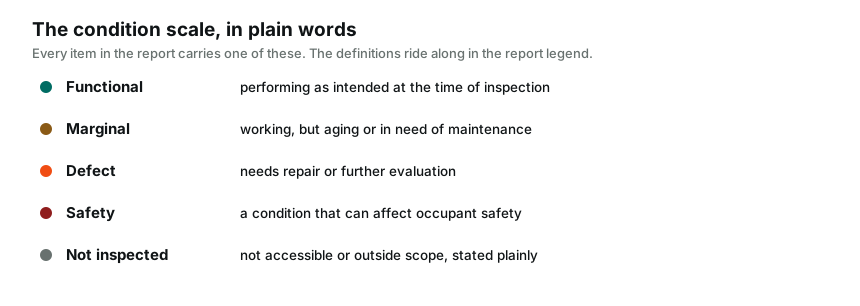
The working definitions
Functional means performing as intended, full stop, including performing while old. Marginal means performing, but aging, worn, or overdue for maintenance in ways worth telling the buyer. Defect means not performing, or performing in a way that requires repair by a trade. Safety means an injury mechanism exists, and it overrides the other three whenever it applies.
The load-bearing word is performing. A fifteen-year-old water heater that heats water is functional, perhaps marginal if its age warrants budgeting advice. The same heater with corrosion at the fittings and moisture below it has stopped performing correctly, defect. The condition labels describe the equipment's present relationship with its job, not its age, not its appearance, and not your prediction about next year, which belongs to the trades anyway.
Boundary cases, worked
The definitions earn their keep at the boundaries, so here are the classics.
The old roof, performing. Widespread granule loss on a twenty-year shingle roof with no exposed underlayment and no interior evidence. Marginal, with budgeting language, because wear that has not become failure is the definition of marginal. The moment underlayment shows or a stain appears below, the same roof crosses to defect.
The gutter full of leaves. Debris restricting drainage is maintenance, marginal. Fascia rot below the overflow line is the consequence arriving, defect at the fascia, marginal at the gutter, two findings, honestly split.
The dead receptacle. No performance, and an unknown upstream cause. Defect, because it needs a trade, and possibly safety if evidence suggests an overheating fault. The tie-breaker is the mechanism test from the electrical narratives guide, name the injury pathway or stay at defect.
The stiff window. Operates with effort, seals intact. Marginal. The window that will not latch is no longer performing its security function, defect. Same component, one word of difference in the observation, and the label follows the performance, not the annoyance.
The furnace at end of expected life, running perfectly. Functional or marginal with budgeting advice, and never defect on age alone. Writing defect on a working furnace because a chart says it is old converts your report from observation to prophecy, and prophecy is where liability lives.
The not-inspected label, calibration's honest sibling
A fifth label deserves a paragraph, because misusing it distorts the other four. Not inspected means access or conditions prevented observation, and it always travels with its reason, the crawlspace access was blocked by stored items. It never means probably fine but unverified, which is how it gets quietly misused to thin out a busy day's report. Every not-inspected without a reason reads later as a gap, and every one with a reason reads as scope. The discipline is identical to the rest of the calibration, say exactly what happened, and let the labels mean what the legend promised they mean.
Why over-calling costs more than under-calling
Every calibration drifts somewhere, and the industry's drift runs toward inflation, marginal findings promoted to defect out of caution. The instinct is understandable and the costs are real.
Agents read many reports, and they calibrate you faster than you calibrate houses. An inspector whose defects are frequently just old teaches the agent to discount the label, which means the one finding that desperately needed weight, the actual failure, arrives pre-discounted. Buyers experience inflated reports as catastrophes, which produces panic, blown negotiations, and the reputation that quietly ends referrals, not thorough, just scary. And in any dispute, a record of inconsistent severity is a gift to whoever is questioning your judgment on the finding that matters.
Under-calling has costs too, obviously, a missed defect is the classic complaint. But the fix for under-calling is inspection thoroughness, while the fix for over-calling is exactly this page, a definition applied consistently.
The buyer conversation, calibrated live
Calibration also happens out loud, at the house, when the buyer trails you asking is that bad. The verbal answer should preview the written label, this is working but aging, it will be in the report as a maintenance item, or this one needs an electrician, you will see it as a defect with a photo. Buyers who hear consistent severity on site read the report as confirmation instead of surprise, and surprises are where post-closing phone calls come from. The report and the walkthrough speaking the same calibration is the finished form of the skill this page teaches.
Making calibration consistent
Consistency beats perfection, and three mechanisms deliver it.
Anchor the definitions in your report itself. A condition legend, one line per label, teaches every reader what your words mean, and the published report's legend, visible in the worked example, is a standing commitment to your own calibration.
Encode the calibration in your library. Every saved narrative carries its condition, so the language and the severity travel together, and the builder's one-tap conditions mean the label gets chosen deliberately, item by item, rather than smeared across a section in an end-of-day hurry.
And run the quarterly self-audit, ten minutes with your last five reports. Count the conditions, read your marginal items asking is this performing, read your defects asking does this need a trade, and check that safety findings all name mechanisms. Drift announces itself in that read, and catching your own drift is what keeps two of your reports on two houses sounding like one inspector.
The labels are the skeleton of your report's meaning. Calibrate them once, publicly, and every finding you file afterward inherits the trust.
Common questions
What is the one-sentence test for marginal versus defect?
Is it still doing its job? Performing while aging or needing maintenance is marginal. Not performing, or failing in a way that needs a trade, is a defect. Safety overrides both when an injury mechanism exists.
Is it safer to over-call defects, just in case?
It feels safer and is not. Systematic over-calling trains agents to discount your reports, buries real defects in noise, and creates a written record of inconsistent judgment that reads badly in any dispute.
Do buyers even understand the difference?
They understand it exactly as well as your report teaches it. A condition legend plus consistent usage trains every reader within one report. Inconsistent usage untrains them just as fast.