Solo inspection business
Web inspection reports vs PDF, what clients actually need
The honest comparison of web-link reports and PDFs, which jobs each format wins, and why the answer for a working inspector is both, in that order.
By Owen Murray, founder of InspectorKit · Updated July 6, 2026
The web-versus-PDF debate in inspection circles usually gets framed as modern against traditional, which misses what is actually going on. The two formats are not competing for the same job. One is a delivery surface, the other is a filing format, and the practical question for a working inspector is not which to pick but which leads.
Watch how reports actually get read and the answer sorts itself out fast.
Where the report gets read, which decides everything
The modern inspection report is read on a phone, in a hallway, between showings, at a kitchen counter. That is not a prediction, it is what happens to your share link within an hour of sending. And on a phone, the two formats are not close.
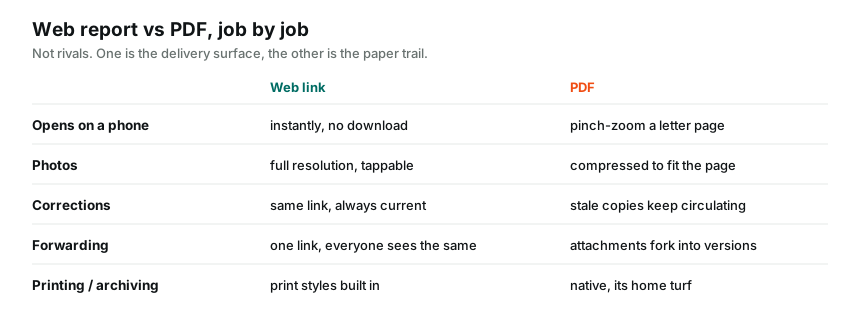
A web report reflows to the screen, loads section by section, and lets a thumb scroll from the summary to a finding to its photo without ceremony. A PDF on a phone is a letter-size page shrunk to palm width, navigated by pinch-zoom archaeology, and abandoned by most readers somewhere around page six. The same content, the same findings, and one of them gets actually read.
Photos widen the gap. Web reports serve images at full resolution, tappable to full screen, which matters because the photo evidence is where your findings live. PDFs compress photos to keep file size shippable, and the circle you drew around the flashing gap survives at exactly the fidelity the compressor felt like leaving it.
The version problem, quietly decisive
Here is the difference that shows up two weeks after delivery. You correct item 12, or add the re-inspection outcome, and now there are two truths in the world.
With a web report there is one link and it is always current. Everyone who ever received it, client, agent, the parents the client forwarded it to, sees the corrected version the next time they open it. With PDFs, the stale copy keeps circulating forever. The buyer's agent attaches version one to the repair request while you and the client are looking at version two, and the mismatch surfaces at the worst available moment.
Forwarding behaves the same way. A link forwards as itself. An attachment forks into copies with independent lives. For a document that feeds a negotiation, one-source-of-truth is not a technical nicety, it is dispute prevention.
What the PDF still owns
None of this makes the PDF obsolete, because the PDF's jobs are real. Lenders, relocation firms, and attorneys often want a fixed file for their records. Some clients want the printed binder feeling, and every inspector meets the occasional reader for whom paper is trust. Archives want fixed artifacts too, your own records included.
So the criterion for choosing software is not web or PDF, it is web with a first-class print path. The published report should produce a clean, printable, PDF-able version on demand, with print styles that were actually designed rather than a browser's best guess. InspectorKit's published reports work exactly this way, the share link is the delivery surface, and the Print / PDF button on every report produces the fixed copy whenever anyone needs one. Both formats, one source of truth, in the right order.
The branding stakes, one paragraph
Formats also differ in whose identity they carry. A well-built web report page is your cover, your name in the header, your contact details one tap from every finding, which is the report branding argument playing out on the highest-traffic surface you have. A PDF emailed as an attachment arrives wearing whatever the email client shows, a filename and a paperclip. The link is a branded experience, the attachment is a file, and over hundreds of deliveries the difference compounds into how professional your operation reads.
Delivery, how both formats ride one workflow
In practice the formats cooperate inside a single same-day delivery ritual. Publish from the driveway, send the link to client and agent, and mention the print option in the email so the PDF-preferring reader knows it exists. The client who wants paper prints it. The lender who needs a file gets one in thirty seconds. Nobody waits, and nobody gets a degraded version of the work.
The archive side runs on the same principle in reverse. Once a year, export your data and keep local fixed copies of the year's reports, because continuity should never depend on any vendor, including mine. Hosted links for the living document, owned files for the record, and the business is covered from both directions.
Access longevity, the three-year question
One more reader deserves planning, the client three years from now. Reports get dug out when houses re-sell, when insurance asks questions, and when a pre-listing inspection needs the baseline. The web link serves that future reader as long as the report stays published, and your local export archive covers every scenario past that, including the vendor going away. PDFs age fine on the client's side too, when they saved one, which most did not. The practical policy is simple, keep reports published indefinitely, keep your own yearly export, and the three-year phone call becomes a thirty-second re-send instead of an archaeology project.
The migration note, for the PDF-era inspector
If your current workflow is PDF-first, the switch costs less than it looks. The report content does not change, the writing discipline does not change, and the delivery email you already send just carries a link instead of an attachment. What changes is everything downstream, read rates, phone experience, correction handling, and the number of where-is-the-report calls, all in the right direction.
Clients never ask for HTML or PDF by name. They ask whether they can open it, read it, and show it to their contractor without friction. Lead with the link, keep the print path one tap away, and both answers stay yes for every reader you will ever deliver to.
Common questions
Do any parties still require a PDF?
Yes, and it is fine. Some lenders, relocation companies, and attorneys want a fixed document for their files, and some clients simply prefer one. That is why the print path matters, the web report should produce a clean PDF on demand rather than making PDF the only citizen.
Is a web report as legally durable as a PDF?
The published report is the record either way, and a fixed PDF snapshot is trivially producible from it whenever a fixed artifact is needed. What matters legally is that the published content is stable and that you retain your own archive, which is an export habit, not a format choice.
What happens to web reports if the software company disappears?
The right question to ask before buying. The answer you want is a real export path, your reports and data downloadable in usable formats whenever you choose. Hosted links plus a local archive you control covers both convenience and continuity.