Switching and migration
How to test new inspection software on real jobs, the parallel method
Demos lie and feature tours flatter. A three-week testing protocol with a scorecard, run on paying inspections, that produces a decision you can trust.
By Owen Murray, founder of InspectorKit · Updated July 6, 2026
Software demos are theater. The vendor drives, the sample data is pristine, and every workflow happens to be the one the tool does best. The only evaluation that predicts your actual future is the tool in your actual hands on actual jobs, and this is the protocol for running that evaluation without risking a single client relationship.
The setup weekend, before any real job
The test starts in the practice environment, not the field. On InspectorKit that is the practice house, a pre-loaded inspection seeded into every account for exactly this purpose.
Spend one focused hour. Tap through the pre-filled findings to learn the condition and narrative anatomy. Change conditions, insert comments, shoot a photo of anything and annotate it. Publish the practice report and open the share link like a client would. That hour answers the disqualifying questions, does the deliverable meet your bar and does the loop feel workable, before any paying job is involved.
Then do the minimum viable setup, branding, and a rough template pass or a library paste if you want your own language available. Resist full migration. The test decides whether migration is worth doing, not the reverse.
The three-week field protocol
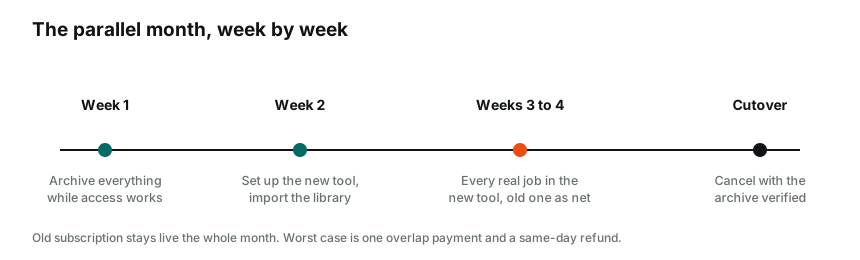
Week one, the new tool takes every job, primary. Not alternating, not duplicating, primary, with the old subscription alive as the net. Alternating produces two half-fluencies and no verdict, and duplicating doubles your work to learn what four primary jobs teach anyway.
Expect the first two jobs to run slower, and write down exactly where. The slowdowns sort into two piles with very different meanings, unfamiliarity, which evaporates by job four, and structural friction, which is the tool actually fighting your workflow and never stops. The scorecard below keeps the piles separate.
Weeks two and three, keep going and start measuring. By job five the muscle memory is real enough that the numbers mean something, and the comparison stops being about newness.
The scorecard, five numbers and two judgments
Measure these, per job, in a note on your phone.
Last photo to sent report, in minutes. The single best proxy for what the tool does to your evenings. On-site completion, yes or no, whether the report was genuinely done before you left, per the driveway standard. Fumble count, times you hunted for an item or fought the interface. Dead-zone behavior, whether basement work survived without drama, which the offline design either handles or does not. And support round-trips, if you emailed a question, how fast and how human the answer came back.
Then two judgments at the end. Deliverable quality, your last old-tool report and your last new-tool report side by side on a phone, read like the agent both were sent to. And the gut check, which tool were you relieved to open by week three. Bodies know before spreadsheets do.
Keeping the test honest with yourself
Two biases quietly rig parallel tests, and naming them is most of the defense. Novelty bias inflates the challenger, the first week's freshness feels like superiority, which is why the scorecard runs three weeks and weights the later jobs. Incumbency bias inflates the old tool, every challenger fumble gets logged while the incumbent's familiar friction has long gone invisible, which is why the fumble count applies to both tools if you run any jobs on the old one. The numbers exist precisely because week-one feelings lie in one direction and week-three habits lie in the other, and minutes-to-sent-report lies in neither.
Reading the results honestly
Three outcomes, three moves.
A clear win on the numbers and the gut means the test is over, run the cutover checklist and cancel with your archive verified. A clear loss is equally valuable, cancel the experiment, keep the incumbent, and enjoy renewed confidence in a tool you now know is earning its rent. That result cost one month and bought years of settled doubt.
The muddy middle, better here, worse there, resolves on structure rather than vibes. Price the tie, $1,300 a year forever against $299 once per the cost table. Check the exits, which tool lets your data leave freely. And weigh the trajectory, a one-person product that answered your support email in an afternoon versus a platform whose roadmap serves a growth chart. Feature ties break cleanly on those three, in whichever direction they point for you.
The one-job version, for the truly time-starved
If three weeks reads as a luxury your season cannot spare, run the compressed protocol with open eyes about its limits. One practice-house hour, one real job as primary, the scorecard on that single job, and the side-by-side deliverable read the same evening. It catches disqualifiers reliably, a deliverable below your bar, a workflow that fights you, an offline failure, and it under-measures the compounding benefits, since library fluency and muscle memory need a few jobs to show. Treat a one-job pass as permission to continue testing, not as a final verdict, and let the remaining jobs of the month finish the evidence at their own pace.
The guarantee makes the whole protocol free
The last piece is why this test costs nothing but attention. The old subscription was money you were spending anyway. InspectorKit's purchase sits inside a 60-day money-back guarantee, so the three-week protocol has ample margin. If the test fails, one email reverses the purchase, and your archive habits mean nothing was ever at risk.
Vendors, this one included, can write persuasive pages all day. The job site outranks every one of them, and it is available for testimony three weeks from now. Book it.
Common questions
Which tool should be primary during the test?
The new one, after one practice run. A test where the challenger only gets scraps proves nothing. The old platform stays paid and ready as the safety net, which is what makes giving the new tool real jobs safe.
Is it dishonest to build a client's report in software I am still evaluating?
The client buys your judgment and a professional report, and both are fully present during a test. Verify the deliverable meets your bar on the practice environment first, then serve clients normally. Professionals change tools, carefully, all the time.
What if the test ends in a tie?
Ties break on structure, not features. One tool costs $1,300 a year forever and one costs $299 once, one holds your data and one exports it freely. A feature tie is not a tie.