Report writing craft
Plumbing defect narratives, language for the leaks and the almost-leaks
Supply, drains, fixtures, and the moisture trail. Field-ready plumbing narratives with the active-versus-evidence distinction that keeps findings honest.
By Owen Murray, founder of InspectorKit · Updated July 6, 2026
Plumbing findings share a special property, the evidence is usually water somewhere it should not be, and water writes its own timeline. Fresh drips, dried stains, mineral crust, each tells a different story, and the narrative's job is reporting which story without upgrading or downgrading it. The three-part structure carries all of it, with one plumbing-specific discipline layered on, the active-versus-evidence distinction.
The distinction that organizes the whole section
Active moisture, present tense consequences. Active moisture was observed at the supply connection below the kitchen sink, with drips forming during fixture operation. Ongoing leakage damages the cabinet base and adjacent flooring. Recommend repair by a qualified plumber.
Evidence without activity, history plus a task. Staining consistent with past moisture was observed at the base of the same cabinet. No elevated moisture was detected at the time of inspection. Recommend monitoring after any plumbing repairs and verifying the source was corrected.
The second narrative refuses two temptations at once. It does not certify the leak fixed, which you cannot know, and it does not report a live problem that is not live, which the seller's plumber would rightly contest. Time-stamped honesty, at the time of inspection, is the plumbing section's most-used phrase for exactly this reason, per the liability inventory.
Supply findings, pressure and materials
Functional flow, the affirmative finding. Functional flow and drainage were observed at all operated fixtures. One line, real information, and the report reads balanced instead of hunted.
Low flow, calibrated. Reduced flow was observed at the master bathroom fixtures, most notable at the shower. Reduced flow at multiple fixtures can indicate supply restrictions or aging distribution piping. Recommend evaluation by a qualified plumber.
Material identification, the careful version. The visible supply piping is polybutylene, identified at the manifold and accessible runs. This material has a documented history of failure at fittings and is no longer used in new construction. Recommend evaluation by a qualified plumber familiar with this material. The shape matters, identity as fact, history as attributable record, judgment routed. The same construction serves galvanized supply lines, early PEX fittings, and whatever your region's housing stock serves up, and it is the same move the electrical narratives use for legacy panel brands.
Corrosion at connections. Corrosion and mineral deposits were observed at the shutoff valves below both bathroom sinks. Corroded valves may not operate when needed and can weep at the stem. Recommend evaluation and replacement as needed by a qualified plumber.
Drain findings, the slow tells
Slow drainage, single fixture. The tub drain at the hall bathroom drained slowly during testing. Localized slow drainage typically indicates a fixture-level restriction. Recommend clearing the drain and retesting.
Slow drainage, multiple fixtures, the escalation. Slow drainage was observed at multiple fixtures on the main level. Simultaneous slow drainage across fixtures can indicate a restriction in the main drain line. Recommend evaluation by a qualified plumber, and consider a camera inspection of the main line. Naming the camera inspection is calibrated helpfulness, a known next step the buyer will hear from the plumber anyway, offered without prescribing it as the only path.
Leaking traps and tailpieces. Moisture was observed at the trap connection below the laundry sink during drain testing. Trap connections that weep under flow will worsen with use. Recommend repair by a qualified plumber.
Venting symptoms. Gurgling was audible at the kitchen sink during drainage of the adjacent dishwasher. Gurgling can indicate restricted venting. Recommend evaluation by a qualified plumber.
Fixtures, the small findings that add up
Toilets. The toilet at the main bathroom was loose at its base. A loose toilet can compromise the wax seal and permit slow leakage into the subfloor. Recommend resecuring and resealing. That narrative earns its place because the consequence, hidden subfloor damage, is invisible and expensive, exactly the kind of translation buyers need.
Caulking and grout, honestly marginal. Deteriorated caulk was observed at the tub surround. Gaps at the surround permit moisture entry behind the finish. Recommend recaulking as routine maintenance. Marginal, maintenance, no drama, and the calibration guide explains why holding that line on small findings protects the big ones.
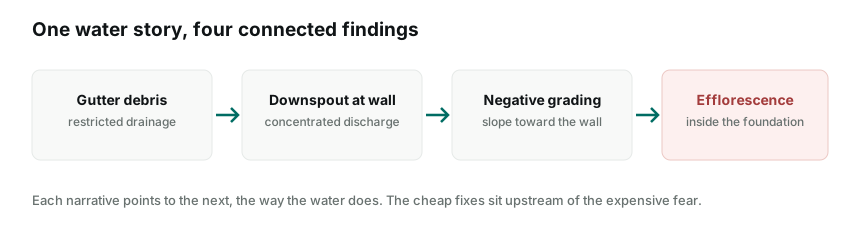
Water staining at ceilings below bathrooms, the coupled finding. Staining was observed at the dining room ceiling below the second-floor bathroom. No elevated moisture was detected at the time of inspection. Recommend verifying past repairs at the bathroom above and monitoring. Ceiling stains are the plumbing section's version of the water story coupling, connecting what the buyer can see to where it came from.
Main shutoff and the utility findings
Two utility entries complete the section. The main shutoff deserves a locating sentence in every report, the main water shutoff is located at the front basement wall and was not operated during inspection. Buyers who can find their shutoff at midnight remember which report told them, and not operated is standard practice honestly stated. Exterior hose bibs earn their seasonal line, the rear hose bib showed damage consistent with past freezing. Recommend repair and winterization practices. Small entries, high recall value, and both belong in the pre-built set.
The section's habits
Three practices keep plumbing sections consistent. Report what you operated, since tested and observed under flow is a stronger sentence than looked at. Time-stamp every moisture claim, active now or evidence of past, never a blur. And photograph the meter or reading when moisture measurements matter, because a number in a photo outlasts a number in memory, per the evidence pairing habits.
Load the language into your library with conditions attached, and the section that documents water damage stops generating its own late-night flood of retyping.
Common questions
How do I report an old plumbing material without predicting failure?
Identify the material as a fact, note its documented service characteristics where they exist, and route the assessment. The pipe's identity is observation. Its future is prognosis, and prognosis belongs to the plumber.
Active leak versus evidence of past leak, why does the wording matter so much?
Because they are different findings with different urgencies and different negotiations. Active moisture is a defect happening now. Staining with dry readings is history plus a monitoring task. Reports that blur them either panic buyers or lull them.
Should I run every fixture during an inspection?
Run what your standards of practice call for and document what you ran. Functional flow observed at all operated fixtures is a finding. So is the fixture you could not test and why.