Templates and resources
The agent handoff kit, four pieces that start the referrals
What to hand a real estate agent who might recommend you, the four-piece kit that answers their real questions, and how to deliver it without a pitch.
By Owen Murray, founder of InspectorKit · Updated July 6, 2026
Somewhere in every inspector's first year comes the realization that agents drive most bookings, followed by the awkward question of what to actually do about it. Cold coffee meetings feel like sales calls, brochures feel like 2009, and the honest answer turns out to be neither. What an agent deciding whether to recommend you needs is evidence and logistics, four specific pieces, deliverable in one short conversation.
Assemble them once, and every agent introduction for the rest of your career runs off the same kit.
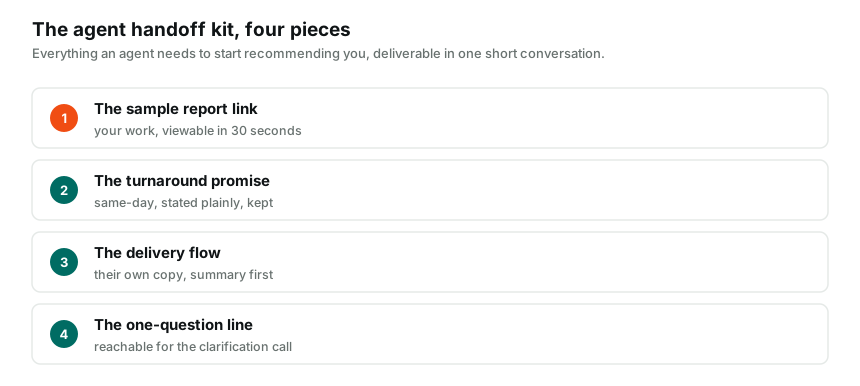
Piece one, the sample report link
The centerpiece, and the only piece that persuades. An agent recommending an inspector is really recommending a report their client will receive and they will work from, so the fastest way to earn the recommendation is showing the actual artifact. A public sample report, opened on their phone during the conversation, answers the quality question in thirty seconds, branded cover, honest stats band, a summary they could draft a repair request from.
Publish yours from a practice inspection and put the link everywhere, the website, your email signature, the business card. The sample report teardown covers what a strong one contains, and the standard it should meet is simple, an agent should be able to forward it to a client with the sentence this is what you will get, and feel safe doing so.
Piece two, the turnaround promise
The second piece is one sentence, stated plainly, report the same day, delivered to you and your client before I leave the driveway. Agents live on the option-period clock, and turnaround is the metric they remember, which makes this the highest-value promise an inspector can make, provided it is kept every single time.
State it as policy, not aspiration, because that is what it is once the field workflow supports it. The promise does its real work later, after the third same-day delivery, when the agent's mental file on you upgrades from fast to never a problem, which is the category that gets the referrals.
Piece three, the delivery flow
The third piece answers the agent's logistical question before they ask it, how does the report actually reach everyone. The answer worth having, your client gets their copy, and with their consent you get your own, same day, with the summary up front where you work from. One sentence again, and it lands because most inspectors make agents chase the client for a forwarded link.
The delivery email templates and the send flow behind them do the actual work, each recipient's copy worded for their role. What the agent hears in the kit conversation is just the outcome, you will never have to ask for a report, and the first transaction proves it.
Piece four, the one-question line
The last piece is reachability, offered explicitly, if anything in a report needs clarifying for the repair request, call or text and you will hear back fast. Agents rarely use it, and knowing it exists changes the risk calculus of recommending you, because the failure mode they fear is an unreachable inspector and a stalled negotiation.
This is also the piece that costs the most discipline, since the promise is only as good as the response time behind it. The question-triage system keeps the calls short and safe, clarifications answered promptly, prices and predictions routed to the trades, and your careful report language never contradicted by a chatty phone answer.
Delivering the kit without a pitch
The whole kit fits in ninety seconds of normal conversation, usually right after a transaction went smoothly. Enjoyed working with you on Cedar Ridge, here is my sample report if you ever want to show a client what they would get, same-day delivery is standard, you always get your own copy, and I am reachable if a report ever needs explaining. Business card with the sample link, done.
No lunch required, no drip campaign, no folder. The kit works precisely because it is not marketing in the usual sense, it is a compressed operational preview, and what agents want is exactly that, evidence the transactions will be easy. The follow-through then does what no pitch can, five or six clean deliveries convert the introduction into a habit, and the flywheel takes over from there.
The listing-agent variant
The same four pieces work on the listing side with one reframe. Listing agents meet you as the opposing inspector first, reading your report against their seller's interests, and the kit's evidence piece is already in their hands, the report from the deal you just shared. What converts them is the calibration they saw there, findings stated as observations, severity that matched reality, nothing inflammatory, plus the same turnaround and reachability promises. The ask changes too, since what listing agents book directly is pre-listing work, and a listing agent who trusted your buyer-side report is the warmest possible lead for it. Same kit, opposite chair, second referral channel.
Keeping the kit honest
Twice a year, audit the kit against reality. Open the sample report as a stranger, is it still your best work, does it still match your current branding and template. Check the turnaround promise against your last month of deliveries, if it slipped, fix the workflow before the promise. And test your own response time on the one-question line, because the kit is a set of promises, and the entire referral channel runs on them being cheap to keep. A kit that stays honest is the last marketing system a solo inspector needs to build.
Common questions
Should the kit be a printed folder or brochure?
It can be, and it mostly should not be. The working kit is a short conversation plus a link they can open on their phone, because the sample report does the persuading and everything else is logistics. Print survives as a business card with the sample link on it, which is the only paper that earns its place.
When do I give an agent the kit?
The best moment is right after a transaction went well, when the agent just watched the kit's promises get kept. The second best is any introduction, new agent in the market, a walkthrough where you met the listing side, a closing gift conversation. It takes ninety seconds and never needs to feel like a pitch.
What about discounts or referral incentives for agents?
Leave them out. Paid referral arrangements are legally restricted in many places and they cheapen the relationship everywhere. The kit works because it promises operational excellence, fast reports, clean delivery, reachability, which is what agents actually route work toward.