Solo inspection business
Repeat business for home inspectors, where it actually comes from
The realistic repeat and referral channels for a solo inspector, why agents dominate the math, and the report habits that keep the flywheel turning.
By Owen Murray, founder of InspectorKit · Updated July 6, 2026
New inspectors buy ads. Established inspectors answer the phone. The difference between those two states is not time in the business, it is whether the work itself has started generating the next work, and that transition has a mechanism you can build deliberately instead of waiting for.
The mechanism runs through a short list of channels, and they are not equal.
The channel math, agents first
Count the potential repeat customers in a single transaction. The buyer purchases a house every seven or so years. The buyer's agent closes deals every month. The listing agent too. One of these parties can send you three jobs a month forever, and it is not the one who paid your invoice.
This is why agent relationships dominate the growth math for every solo practice that has actually grown. A handful of agents who trust you, each doing a couple transactions a month, fills a calendar. The full breakdown of what agents want covers the reader's side in detail, but the compressed version is this, agents recommend the inspector who has never caused them a problem. Fast reports, honest calibration, clean delivery, reachable for the one clarifying question. No basket of muffins competes with that.
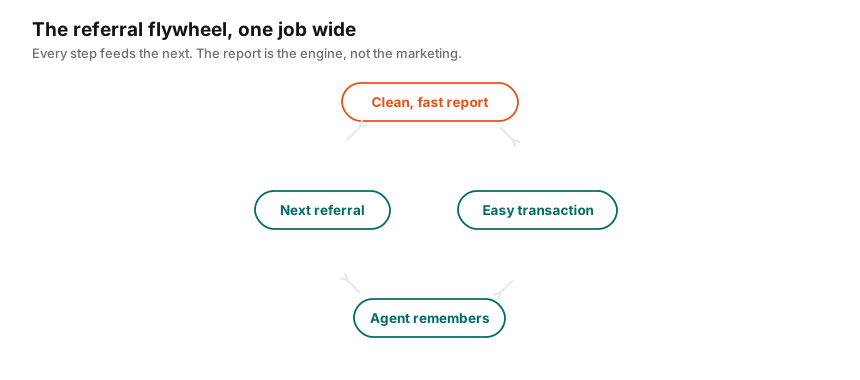
The flywheel, turned by the report
Notice what sits at the top of the wheel. Not networking, not ads, the report. Every channel below feeds on the same artifact, which is convenient, because the report is the thing you were already producing.
The flywheel turns on three report habits. Same-day turnaround, because the deadline is the agent's whole world and the inspector who never threatens it becomes the default call. Honest, boring consistency in severity, because agents watch a bigger sample of your work than any client and they are pattern-matching for the inspector they never have to explain. And delivery that reaches everyone cleanly, the client's copy and the agent's own copy, each worded for its reader, the same day.
None of that is marketing in the usual sense. All of it is marketing in the only sense that compounds.
Past clients, the slow channel worth keeping warm
Client repeat business is real, just slower. The buyer you inspected for in 2023 sells in 2028, and a pre-listing inspection is the natural second engagement. Between those bookends they refer a coworker, order a re-inspection after repairs, or call about the house they are helping their parents buy.
The mechanism for all of it is findability, and the report is the findability. The document they kept has your name, license, and phone number on every page, which is one of the quieter arguments for report branding done properly. An inspector whose old reports carry a vendor's identity instead of their own has disconnected the only reliable wire back to past clients.
A light touch keeps the channel warm without becoming a newsletter nobody wanted. The delivery email that says keep this report for your records, it is useful when you sell, plants the pre-listing seed at zero cost. Some inspectors send a one-line note when a past client's neighborhood is selling hot. Past that, restraint. The goal is being remembered as the professional, not the mailing list.
The channels that underperform their reputation
For calibration, the places solo inspectors overspend attention. Broad social media, because homebuyers do not follow inspectors and the audience that matters, agents, is reached better through work than through posts. Paid directory listings, which mostly sell placement against other inspectors in a price-shopping context, the worst frame for a premium operator. And referral incentives, which are legally constrained under RESPA and state rules in many places and read as exactly what they are to the agents worth having.
None of these are catastrophic. They are just weak, and every hour they consume was an hour the strong channel, the work itself, did not get.
Building the short list deliberately
The agent list does not have to assemble itself by accident. When a transaction goes well, the follow-up is one honest sentence to the agent, glad that closed smoothly, happy to help your clients any time, with your contact details they already have. New agents in your market are worth a coffee, because their inspector loyalties are unformed and their careers are long. And every re-inspection or pre-listing job is an audition in front of an agent who books inspections constantly.
Then let the sample size work. An agent decides after five or six clean transactions, not one, which means the flywheel's real input is consistency over months. The practices that reach answer-the-phone status are not doing anything exotic. They are doing the same unexciting things, fast honest reports delivered cleanly, every single time, until the market notices there is an inspector who can be counted on, and starts doing the marketing for them.
Measuring whether it is working
The flywheel has a simple gauge, ask every booking how they found you and keep the tally somewhere you will see it. A healthy maturing practice watches the mix shift quarter by quarter, from ads and directories toward agent names and past-client referrals. When two thirds of new work arrives with a person's name attached, the flywheel is turning and the paid channels can wind down. When the mix stalls, the tally usually points at which habit slipped, turnaround stretched, an agent's last transaction went sideways, or delivery got inconsistent. The diagnosis is almost always in the reports, because the reports were always the engine.
Common questions
Buyers only purchase a house every several years. Is client repeat business real?
Smaller than agent business but real. Past clients come back for pre-listing inspections when they sell, order re-inspections, and refer friends entering the market. The mechanism is being findable, which is why the report they keep, carrying your name and contact details, matters years after the job.
How many agent relationships does a solo practice actually need?
Fewer than the marketing advice implies. A handful of active agents who each close a couple deals a month, sending you even half their inspections, fills most of a solo calendar. The goal is not hundreds of contacts, it is a short list of agents who never worry about your work.
Do referral fees or agent gifts help?
They are legally restricted in many states and reputationally corrosive everywhere. RESPA and state rules constrain paying for referrals, and agents worth having are recommending the inspector who makes their transactions easy, not the one who sends gift cards. Spend the energy on turnaround instead.