Report writing craft
New-construction inspection reports, phase by phase
How to structure pre-drywall, pre-closing, and 11-month warranty inspection reports, and the builder-facing language that gets findings fixed.
By Owen Murray, founder of InspectorKit · Updated July 6, 2026
New-construction inspections run on a belief gap. The buyer assumes a new house is a clean house, the builder's schedule assumes the county sign-off settled the question, and the inspector is the only person in the transaction paid to actually look. The findings are usually plentiful, usually fixable, and usually invisible four months later, which is exactly why the reports need their own structure.
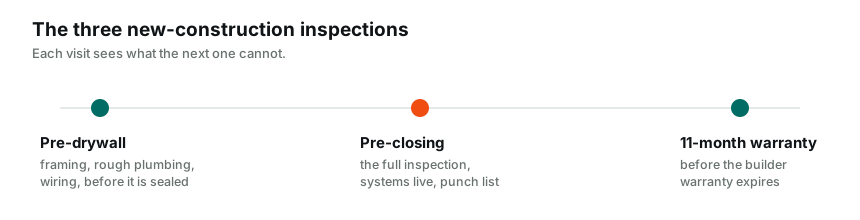
The work splits into three distinct visits, and each one produces a different kind of report.
Pre-drywall, the report that sees through walls
The pre-drywall visit happens after framing, rough plumbing, electrical, and HVAC are in, and before insulation and drywall seal them away. Everything documented at this stage is cheap to fix and impossible to see later, which makes this the highest-value report in residential work per finding.
The report structure should follow the systems, not the rooms. Room-by-room organization falls apart in a house with no rooms yet, so the sections that earn their place are framing and structure, rough plumbing, rough electrical, HVAC rough-in, and roof and envelope. A customizable template pays for itself here, since duplicating your standard template and rebuilding the section list once gives you a permanent pre-drywall template you reuse on every build.
Photograph relentlessly at this phase. Every photo of correct work is future evidence too, because the pre-drywall photo set becomes the only record of what is inside those walls. Buyers forward these reports to friends for years, and more than one warranty dispute has been settled by a framing photo from the pre-drywall visit.
Pre-closing, the full inspection with a twist
The pre-closing visit is closest to a standard inspection, systems live, finishes in, the full residential scope. Your normal template and field workflow apply directly.
The twist is the reader. This report goes to the builder's punch-list process, which means findings get worked by trade crews from your list. Two adjustments serve that reader. Keep one finding per item rather than bundling, because bundled findings get half-fixed, and route each recommendation to the specific trade even when it feels obvious. The three-part narrative discipline holds exactly as it does on resale work, observation, implication, recommendation, but the recommendation lines are doing extra duty as work orders here.
Calibration deserves a note. New-construction findings skew toward incomplete rather than failed, the water heater strap not yet installed, the attic access not yet insulated. Resist inventing a softer vocabulary for builder work. The condition ratings you already use describe incomplete installations fine, and consistent calibration is what keeps your reports comparable across every job you do.
The 11-month visit, the deadline report
Most builder warranties run one year, and the 11-month inspection exists to catch everything before that door closes. It is a full inspection of a lived-in young house, and its findings concentrate in the places new construction settles, drywall cracking at corners, doors gone out of square, HVAC balancing, grading that composted down and now slopes toward the foundation.
The report's job is to be a warranty claim document. Findings should be specific, photographed, and dated, because every item on this list is about to become a request the builder is contractually obligated to evaluate. Write it knowing the builder's warranty department is the primary reader, and the liability-safe phrasing that protects you on resale work doubles here as the neutral tone that keeps warranty conversations from becoming arguments.
Delivery timing matters more than on any other report type. An 11-month report delivered promptly gives the homeowner weeks to file. Delivered slowly, it can literally expire. Same-day publishing from the driveway is the standard this service line runs on.
Builder-facing language, the diplomacy layer
Every new-construction report is read by someone whose work it critiques, and the reports that get findings fixed share a property, they are impossible to take personally. Pure observation does that. The flashing terminates above the step, water staining was observed at the subfloor below the master bath, the return duct is not connected at the trunk. No adjectives, no craftsmanship commentary, no comparisons to how it should have been done, just the observable condition and the routing.
This is not softness, it is effectiveness. A builder can argue with sloppy. Nobody argues with a photo of a disconnected duct. The finding that reads as a neutral fact gets scheduled for repair, and the finding that reads as an accusation gets escalated to a meeting, and only one of those outcomes serves your client.
Scheduling against the builder's calendar
The practical failure mode of new-construction work is timing, not technique. Pre-drywall windows are set by the builder's schedule and can close with two days of notice when the insulation crew shows up early, so the booking conversation needs the superintendent's name and a same-week callback plan. Ask the buyer to request the inspection window in writing when they sign the contract, since builders honor what the purchase agreement mentions and forget what it does not. For the 11-month visit, have the client book it around month ten. The report needs time to become warranty claims before the deadline, and a visit in week fifty-one helps nobody.
Making it a service line
The three-visit package sells naturally as a bundle, and buyers who understand the phases rarely skip pre-drywall once it is explained. Build the two extra templates once, keep the comment library growing with construction-specific entries as you meet them, and deliver every phase same-day. Builders learn which inspectors produce clean, neutral, actionable reports, and in new-construction-heavy markets that reputation compounds into agent and even builder referrals, the rarest kind there is.
Common questions
Why inspect a brand-new house at all?
Because municipal inspections check code minimums on a schedule, not workmanship on your buyer's behalf. County sign-off means the house met the floor. New-construction findings are routine, flashing details, ductwork left disconnected, missing insulation batts, and the buyer's inspection is the only quality check whose client is the buyer.
Do builders push back on inspection findings?
Good ones fix the list and move on. The pushback that does happen almost always targets wording rather than substance, which is why observation-based language matters even more here. A finding that says the flashing was not installed per the visible manufacturer marking is hard to argue with. A finding that says sloppy work is easy to dismiss.
Which phase matters most if the buyer only pays for one?
Pre-drywall, and it is not close. Framing, rough plumbing, wiring, and ductwork disappear behind finished walls forever. A pre-closing inspection sees surfaces. The pre-drywall visit sees the systems the house will run on for fifty years, while every one of them is still correctable at low cost.