Alternatives and comparisons
One-time payment inspection software, a buyer's guide
The break-even math, the sustainability questions, and the red flags to check before trusting any lifetime or pay-once inspection software offer.
By Owen Murray, founder of InspectorKit · Updated July 6, 2026
Pay-once software is having a small comeback, and inspection tools are part of it. The pitch is simple enough. Stop renting, buy the tool, keep your money. The pitch being simple is exactly why it deserves scrutiny, so this is the guide I would want if I were the one buying.
Full disclosure before the analysis. I build InspectorKit, which is a one-time purchase, and this page will use it as the worked example. The checklist, though, is designed to be turned against my own product just as hard as anyone else's.
Start with the break-even table
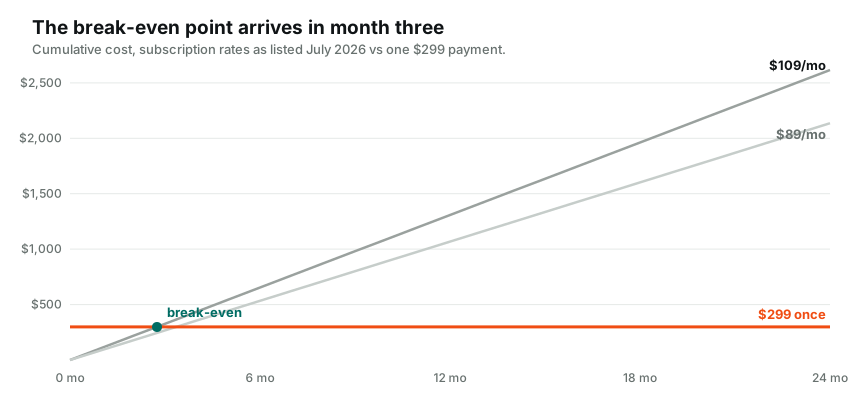
The whole financial argument fits in one small table. Take the subscription you pay now or were about to sign up for, and compare the running total against a single $299 purchase.
| Timeline | At $89 per month | At $109 per month | One payment of $299 |
|---|---|---|---|
| 3 months | $267 | $327 | $299 |
| 1 year | $1,068 | $1,308 | $299 |
| 2 years | $2,136 | $2,616 | $299 |
| 4 years | $4,272 | $5,232 | $299 |
Those monthly figures are the publicly listed solo prices of the industry's two biggest platforms as of July 2026. The crossover lands around month three, which means the entire question of whether the purchase was smart is settled inside a single season, and every month after is pure difference.
The table has one honest caveat. It assumes the one-time tool actually does your job. A cheap tool you fight every day costs more than any subscription, which is what the rest of this guide is for.
The five checks that separate real from gimmick
A one-time price is a claim about the future, so verify the structure behind it.
Check the exports first. Your reports, your template, your comment library, out as ordinary files, today. InspectorKit documents this on its export page, and any serious vendor should be able to point at the equivalent. If exports are vague or coming soon, so is your exit.
Check what the payment actually covers. Read the plan page slowly. A real offer states its limits plainly, like InspectorKit's 500 reports per month ceiling, which no solo inspector approaches. A gimmick hides the limits until you hit them.
Check how recurring costs are handled. Compute-hungry features and extra users cost the vendor money forever, so an honest pay-once product prices those as optional add-ons rather than pretending they are free until quality quietly sinks. The shape of the billing page tells you a lot about the shape of the company.
Check the refund terms, then trust them only as far as they are specific. A clearly stated window, the full amount, and no conditions beyond asking are the standard worth demanding. Vague satisfaction language is not a guarantee, it is a mood. InspectorKit's window is 60 days.
And check who answers when you write in. One-time pricing usually comes from small vendors, which cuts both ways. You lose the big-company comfort blanket and gain a person with their name on the product who answers directly. Send a pre-sales question and see what comes back, because that response is the support experience you are buying.
The sustainability question, answered rather than dodged
The fair skeptical question about pay-once software is how the vendor survives without renewals. It deserves a real answer, so here is mine for InspectorKit.
The product is built and run by one person with lean infrastructure costs, priced so each sale is genuinely profitable rather than a loss-leader for a future squeeze. Growth comes from new inspectors, not from re-billing old ones, which keeps the incentive pointed at the product staying recommendable. The few truly recurring costs are add-ons, so they fund themselves. And the exports exist so that even the worst case, any vendor's worst case, cannot take your business data down with it.
You do not have to take that on faith. It is the same standard I am telling you to hold everyone to, and the FAQ answers the what-if-something-happens-to-you question directly, because inspectors ask it and they should.
Founding pricing and deal-site lifetimes are different animals
One distinction worth knowing before comparing offers. Deal-site lifetime promotions, the kind that flash across marketplaces, are usually a cash-raising event where the vendor sells future obligations at a discount and hopes to upsell later. Vendor-direct founding pricing is a different structure, an early price for early customers that the vendor expects to honor because those customers are the product's proving ground. Ask which one you are looking at. The answer changes how much weight the word lifetime can hold, and a vendor selling direct with public terms, a real guarantee, and working exports is making a promise their own infrastructure can keep.
Where the subscription still wins
Balance requires saying this part too. If your operation leans on scheduling automation, integrated agreements, payment collection, and a CRM, the big subscription suites bundle those and a one-time report tool does not. You would be assembling your business stack from parts, which some inspectors prefer and some genuinely do not.
The one-time model shines brightest for the solo inspector whose bottleneck is the report itself. If your evenings go to writing and your software bill goes up every year you succeed, the trade is straightforward.
How to decide in one month
Run the boring, reliable experiment. Look at the sample report and judge the deliverable cold. Take the ten-minute first report for a spin. Then run one real inspection through it while your subscription still runs, send the result to your sharpest agent, and listen.
A month of parallel running costs you one more subscription payment. It buys you an evidence-based answer to a four-figure question, with a money-back guarantee holding the downside at zero. That is the kind of trade inspectors make all day, just usually about houses.
Common questions
Are lifetime software deals always a gimmick?
No, but the word lifetime is doing heavy lifting in some offers. The difference between a real one and a gimmick is structural, meaning honest add-on pricing for recurring costs, working exports, and a vendor whose survival does not depend on selling your renewal.
What break-even period makes a one-time purchase obviously worth it?
Under six months against your current subscription is a clear yes, assuming the tool does the job. A $299 purchase against an $89 to $109 monthly fee breaks even in about three months, and everything after that is savings.
Should I worry the vendor disappears after taking one-time money?
Ask it directly of every vendor, subscription ones included, since subscriptions disappear too. Then protect yourself the structural way, by exporting your reports, template, and comments regularly so no vendor's fate can strand your business.