Alternatives and comparisons
Whose report is it? Ads and upsells inside inspection reports
Report platforms now monetize the document your client reads. How the quote and paid-estimate layers work, and how to audit your own reports.
By Owen Murray, founder of InspectorKit · Updated July 6, 2026
Open one of your own published reports the way a client does, on a phone, from the link you sent. Read everything on that page, not just your findings. For a growing number of inspectors on the big platforms, that exercise has become uncomfortable, because the page carrying their license number has quietly become a storefront.
This guide explains the mechanism, why it exists, and how to audit your own deliverable, whatever software you use.
What monetized reports actually look like in 2026
The crude version, literal banner ads, is rare. The current pattern is more polished and worth understanding precisely.
The first layer is provider quote comparison. As of July 2026, the industry's largest platform describes giving homebuyers a way to compare quotes from top providers, all in one place, right when they need it. Read that sentence from the platform's side and it is a service. Read it from yours and it means the moment your client is reading your findings, offers from third-party companies are part of the experience, placed there by your software vendor, on the strength of the trust your inspection created.
The second layer is paid repair estimates. Report platforms integrate third-party estimate services that convert your report into a priced repair list, sold to you per report or retailed to your client directly at prices publicly listed around $70 to $100 per report. Again, arguably useful. Also again, a transaction happening on top of your work, where someone else sets the price and takes the margin.
Neither layer announces itself on the pricing page you signed up from. Both live where only your clients look.
Why platforms do this, in one sentence
Subscription growth eventually saturates, and the untapped audience is not inspectors, it is the millions of homebuyers flowing through inspectors' reports every year. Your deliverable is their distribution.
Once you see that incentive, product decisions across the industry snap into focus. The report viewer becomes an experience the platform controls. The client's attention becomes inventory. And the inspector, whose name and license anchor the document's credibility, becomes the channel. None of this requires anyone to be villainous. It only requires a business model doing what business models do, which is exactly why it will not reverse on its own.
The audit, five minutes on your own reports
Do this today, whatever platform you use.
Open a recently delivered report from the client's link, not your dashboard preview, because some platforms show inspectors a cleaner view than clients get. Read every element on the page and ask of each, did I put this here, does it serve my client or someone's funnel, and does it make me look more professional or less. Check your platform settings for anything named partner offers, homeowner services, marketplace, or estimates, and note which are on by default. Then decide, deliberately, what stays.
Some inspectors conclude the extras genuinely help their clients and keep them on. Fine, that is a choice made with open eyes. The problem is the inspectors who have never looked.
What this costs you, even when it is subtle
Three things, each hard to see on any single report.
Trust dilution first. Your report's authority comes from being disinterested, you have no stake in what the findings cost to fix. Commercial offers embedded in the experience blur exactly that line, and buyers notice more than they say. Brand erosion second. You paid for the inspection of your own brand, and the branding you configured shares the stage with logos you never chose. And negotiation leverage third, the quiet one. When your vendor monetizes your clients, you stop being the customer and start being the supply, which changes how much the platform needs to keep you specifically happy at renewal time.
The structural fix, and its price
Settings toggles help until the next feature ships defaulted on. The durable fix is choosing software whose business model does not need your clients.
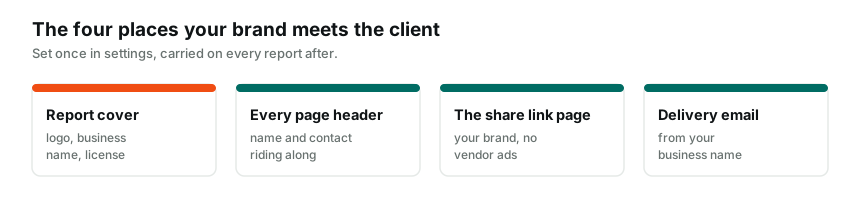
That is the actual reason InspectorKit is a one-time purchase. $299 buys the tool, and the transaction ends there, so the product has no reason to farm your report traffic. Your published report carries your logo, your findings, your license, and nothing else, delivered by a clean link with a send flow that goes out under your business name. There is no marketplace because there is no subscription growth chart demanding one.
The price of that model is the absence of the platform layers, no bundled scheduling, no payment collection, and no estimate marketplace even if you wanted one. The Spectora alternative guide walks the full trade-off honestly, because inspectors who genuinely want the extras should choose them on purpose.
If you stay, negotiate like the channel you are
One practical move for inspectors keeping their current platform. The monetization layers exist because your reports carry valuable traffic, which means you carry leverage you probably have not used. At renewal, ask what the platform earns from services sold around your reports, ask for the settings that disable each layer in writing, and ask what happens to those defaults next year. You may not get numbers, but you will get a conversation that clarifies exactly what kind of customer you are, and clarity is worth having before the auto-renew fires.
The question that settles it
Every inspector eventually answers one question, deliberately or by default. Is the report a document you produce for your client, or a surface your vendor produces revenue from, with your license as the trust anchor?
Neither answer is illegal. Only one of them is yours to control, and checking takes five minutes with a report link and honest eyes. Whatever you find, decide on purpose. Your name is the one at the top of the page.
Common questions
Are these literally banner ads inside reports?
Usually not banners. The current pattern is softer, third-party provider quote comparisons and paid repair-estimate offers presented around the report experience your client opens. The commercial effect is similar, someone else's offer riding on your document.
Is it wrong for a platform to offer repair estimates?
Not inherently, and some clients find them useful. The questions that matter are who chose to put the offer there, who profits, and whether you as the license holder can turn it off. If the answers are the platform, the platform, and check the settings, you should at least check the settings.
Does InspectorKit put anything in or around my reports?
No. Your published report carries your branding and your findings, full stop. No third-party offers, no quote comparisons, no powered-by upsell, and that is a permanent design position, not a plan tier.